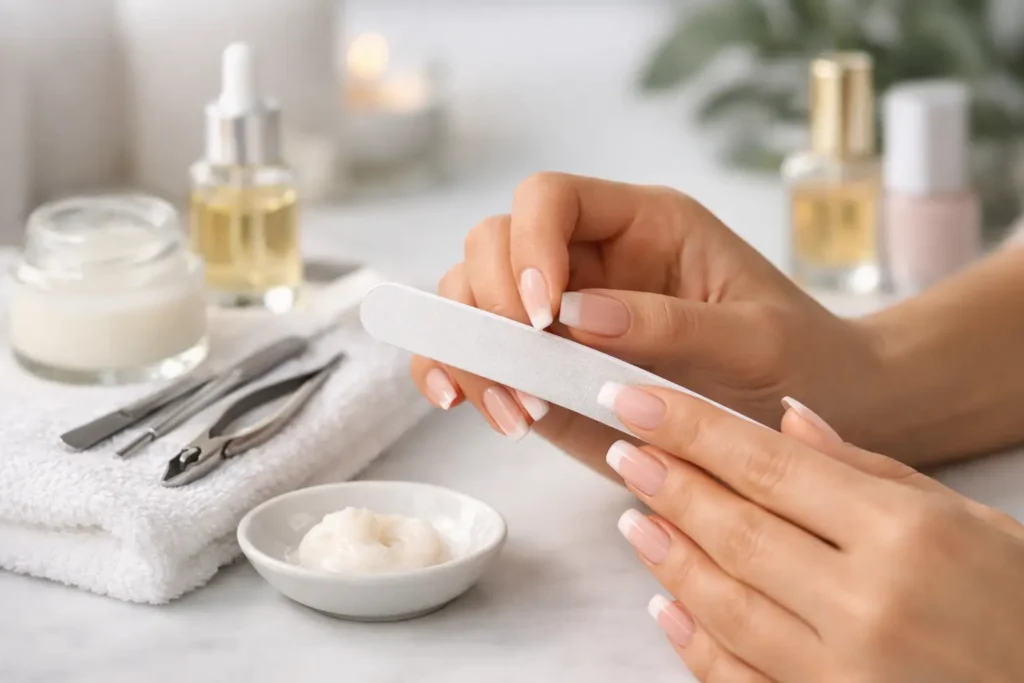
A fresh acrylic set should feel like a small luxury every time you look down at your hands. Knowing how to care for acrylics between appointments helps protect that polished finish, preserve your nail art, and keep your natural nails comfortable underneath. The goal is not to treat your hands delicately all day, but to give your manicure the thoughtful care it deserves.
Start With the First 24 Hours
Your acrylic nails are ready to wear when you leave the salon, but the first day still matters. Avoid prolonged soaking in hot water, steam-heavy activities, or using your nails to open packaging. These habits can place extra pressure around the edges of the enhancement, where lifting is most likely to begin.
If you have a longer shape, such as coffin, stiletto, or almond, be especially mindful of sudden impacts. A beautiful shape is part of the design, but more length naturally creates more leverage if a nail catches on a drawer, bag, or car door. Use the pads of your fingers where possible, rather than the tips of your nails.
Keep Cuticles Hydrated Every Day
Cuticle oil is one of the simplest ways to maintain the look and comfort of acrylic nails. Apply a small amount around each nail once or twice daily, then gently massage it into the cuticle area and surrounding skin. This keeps the skin soft, supports a neat-looking grow-out, and helps prevent dry cuticles from making an otherwise flawless manicure look tired.
Hydration matters even more in cold weather, after handwashing, or when you use hand sanitizer often. Keep a small cuticle oil pen or bottle in your handbag, on your desk, or beside your bed so it becomes an easy part of your routine. Follow with hand cream whenever your skin feels dry.
Acrylic enhancements themselves do not absorb moisture the way natural nails do, but the natural nail and skin beneath still need care. Healthy surrounding skin makes every color, French tip, chrome finish, or detailed design look more refined.
Protect Your Acrylics During Chores
Household cleaning products, hot water, and repeated exposure to chemicals can dull the surface of your nails and dry out your hands. Gloves are the easiest solution when washing dishes, cleaning bathrooms, gardening, handling laundry products, or working with strong cleaners.
This is not only about preserving shine. Water can work its way into a lifted area if one develops, creating a place where debris and moisture can collect. Wearing gloves and keeping your hands dry after wet tasks helps reduce that risk.
It also helps to rethink the little jobs nails often get assigned. Do not use acrylics as tools for scraping labels, prying open cans, separating keys, peeling stickers, or unfastening jewelry. Even a strong acrylic set can crack, lift, or break when it is forced sideways. A moment of convenience can turn into an uncomfortable repair appointment.
Be Gentle With Handwashing and Sanitizer
Clean hands are always essential, especially before meals and after being out and about. Wash thoroughly, but avoid very hot water and harsh scrubbing around the nail edges. Pat hands dry carefully, including beneath the free edge, rather than rubbing aggressively with a towel.
Alcohol-based sanitizer is practical when you are on the go, but frequent use can leave the cuticles dry. Balance it with cuticle oil and a nourishing hand cream. If your hands feel rough, do not pick at dry skin near the nails. Instead, moisturize it and allow it to soften naturally.
For clients who work in healthcare, hospitality, childcare, or other hands-on roles, a shorter acrylic length may be easier to maintain. Personal style and daily lifestyle should work together. A well-shaped short or medium set can be just as elegant as a dramatic long design, with less chance of catching or breaking during a busy week.
Do Not Pick, Bite, or File Lifting Nails
A small lifted corner can be tempting to touch, especially if it catches on fabric. Resist the urge to peel it back, glue it down at home, or file deeply into the area. Pulling on acrylic can remove layers of your natural nail along with it, leaving the nail thin and sensitive.
If an edge is snagging, lightly smooth only the sharpest free edge with a fine nail file until you can arrange a professional repair. Do not file near the cuticle or try to thin the acrylic yourself. The product may look bulky as your natural nail grows, but removing material incorrectly can compromise the structure of the set.
Biting acrylics can cause more than a chipped tip. It places pressure on the enhancement and natural nail plate, which may lead to cracks or painful breaks below the free edge. If nail biting is a habit, choosing a practical length and booking regular maintenance can make it easier to keep hands looking polished.
Know When to Book a Fill or Repair
Most acrylic nails need a fill around every two to three weeks, depending on your natural nail growth, lifestyle, and the original length of the set. Waiting too long creates a larger gap at the cuticle, changes the balance of the nail, and increases the risk of lifting or breakage.
A fill appointment is also the right time to refresh your shape, update your color, and check that every nail remains secure. If you love changing your look, this is a chance to move from a neutral everyday manicure to a seasonal color, soft French design, chrome detail, or a more expressive set without compromising the health of your natural nails.
Book a repair sooner if you notice a crack, lifting, pain, discoloration, or a nail that feels loose. A repair is usually quicker and more comfortable when handled early. Do not wait for one damaged nail to become a full break.
Signs Your Set Needs Professional Attention
Pay attention to changes that go beyond normal grow-out. Contact your nail technician if you notice any of the following:
- A lifted edge that catches on hair, clothing, or towels
- Cracks across the acrylic or through the free edge
- Redness, swelling, tenderness, or persistent discomfort around the nail
- Green, yellow, or dark discoloration beneath the enhancement
- A broken nail that exposes or pulls on the natural nail
Discoloration, pain, or swelling should never be covered with polish or another layer of product. Leave the area alone and seek professional guidance promptly.
Choose Professional Removal, Not a Quick Fix
When you are ready for a change, professional removal is the kindest option for your natural nails. Acrylic should be carefully reduced and soaked off or removed by a trained technician, rather than peeled away at home. Peeling can take the upper layers of the natural nail with it, causing weakness that may take weeks to grow out.
If you want to take a break from acrylics, ask about a gentle transition plan. A shorter set, a structured manicure, or a nourishing natural-nail service may suit your goals while your nails grow. There is no one right choice – it depends on your nail condition, preferred look, and how much maintenance fits your routine.
Let Your Appointment Reflect Your Lifestyle
The best acrylic nails are not only beautiful in the salon chair. They should support how you work, relax, get ready, and express yourself every day. At Natural Nails & Beauty, thoughtful preparation and tailored shaping help create a set that feels as good as it looks.
Keep your cuticles nourished, protect your hands during chores, and book maintenance before small issues become larger ones. With a little daily care, your acrylics can stay glossy, comfortable, and confidently you until it is time for your next fresh set.