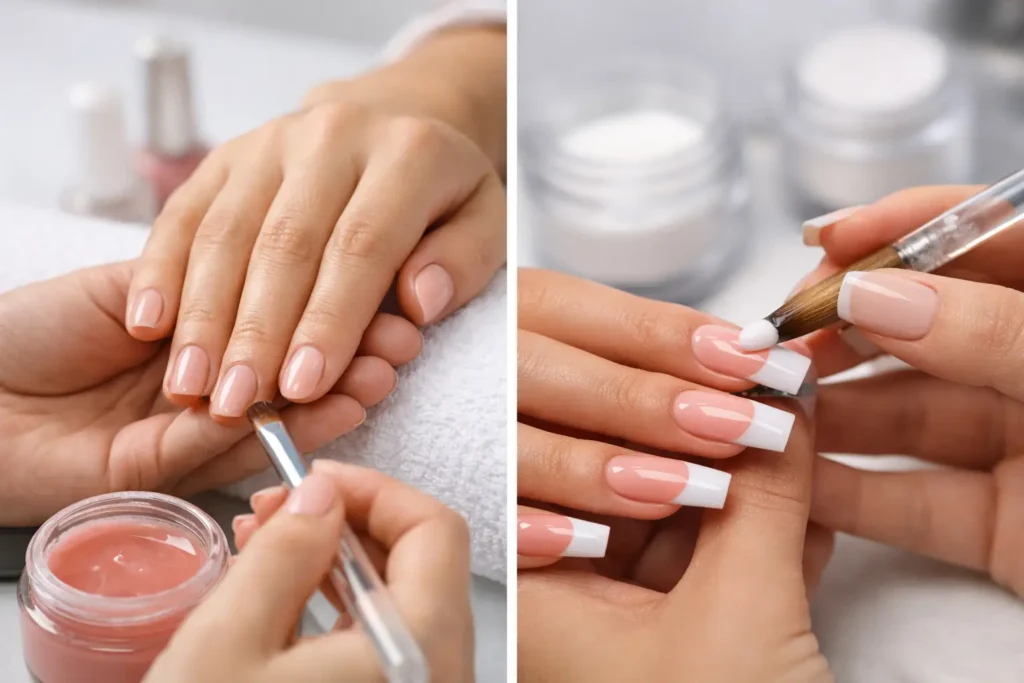
You usually know something is off by week two. Maybe one nail feels too thick, maybe the shape no longer suits your daily routine, or maybe you loved the photo you brought in but not how the set wears on your hands. When clients ask about biab vs acrylic nails, they are rarely asking which one is better in a general sense. They are asking which one will look right, feel comfortable, last well, and suit the way they actually live.
That is the real comparison worth making. Both BIAB and acrylic can create beautiful results, but they do different jobs. The best choice depends on your natural nails, your style, and how much structure or length you want from your appointment.
BIAB vs acrylic nails: the core difference
BIAB stands for builder in a bottle. It is a strengthening gel product designed to add structure over the natural nail. It is especially popular for clients who want a clean, refined finish with support for natural nail growth. The look is often lighter and more natural than traditional enhancements, although it can still be finished with color, French tips, or nail art.
Acrylic is created by combining liquid monomer and powder polymer to form a hard overlay or extension. It is known for durability and for its ability to build length and shape more dramatically. If you want a bold almond, a sharp square, or extra-long nails with a strong architectural feel, acrylic is often the more suitable option.
So in simple terms, BIAB tends to support and strengthen what you already have, while acrylic is often chosen to build more length and create more dramatic structure.
Who BIAB suits best
BIAB is a favorite for clients who want their nails to feel polished without looking heavy. If your natural nails bend, peel, or struggle to hold shape, BIAB can provide the extra support that helps them grow more evenly. It works beautifully for short to medium lengths and for anyone who prefers an elegant, natural finish.
This service also suits clients who use their hands constantly but do not want the thickness that can come with a more sculpted enhancement. Think everyday professionals, busy moms, or anyone who wants their nails to look neat, glossy, and elevated from morning meetings to weekend plans.
That said, BIAB is not always the answer if your goal is significant length. It can reinforce natural nails very well, but it is not usually the first choice for long extensions or highly dramatic shapes. If your nails are very short and you want an immediate transformation, acrylic may get you there faster.
Who acrylic suits best
Acrylic is ideal for clients who want length, structure, and staying power. It is often the go-to for those who love statement nails, defined shapes, or a more customized build. If your natural nails are short, uneven, or prone to breaking before they reach your preferred length, acrylic can create the look immediately rather than waiting for growth.
It also suits clients who are hard on their hands and want a stronger enhancement. For some, that means a set that stands up better to daily wear. For others, it means having more freedom with shape and design. Acrylic remains one of the most versatile systems in the salon for a reason.
The trade-off is feel and finish. Some clients love the firmness of acrylic. Others find it less flexible than they prefer, especially if they are used to a softer, more natural look. It is strong, but strong does not automatically mean better for every lifestyle.
BIAB vs acrylic nails for appearance
If your priority is a soft, healthy-looking manicure, BIAB often wins on appearance. It tends to have a smoother, more natural profile on the nail, especially when expertly applied and shaped to complement your hands. It is perfect for minimalist color, glossy neutrals, and clean nail looks that feel expensive without trying too hard.
Acrylic has its own beauty, but it reads differently. It can be sleek and refined, yet it is better known for delivering definition. The structure is more noticeable, which makes it excellent for stronger shapes and detailed designs. If you love a crisp French, bold length, or a set that feels styled from every angle, acrylic has an advantage.
Neither look is wrong. It simply comes down to whether you want understated polish or a more sculpted result.
Durability and day-to-day wear
This is where the comparison becomes personal. Acrylic is generally considered the tougher option, particularly for longer nails. Its rigid structure can hold shape well and perform beautifully for clients who want dependable wear over a few weeks.
BIAB is durable too, but in a different way. It has a slightly more flexible feel, which many clients find more comfortable on natural nails. That flexibility can be a benefit if you prefer your nails to feel less rigid during daily tasks. On shorter lengths, BIAB can wear exceptionally well.
Problems usually happen when the product and the lifestyle do not match. If someone wants long, dramatic nails but chooses BIAB because they assume it is always gentler, they may be disappointed by lifting or breakage. If someone wants a natural everyday manicure but gets a thick acrylic set, they may feel overdone. The service needs to fit the person.
Maintenance matters more than most clients expect
Both BIAB and acrylic need regular upkeep. Neither is a one-time fix. As your natural nails grow, the balance of the enhancement changes, and that is when fills, rebalancing, or safe removal become important.
BIAB appointments are often appealing to clients who like a consistent maintenance rhythm and want their nails to stay tidy and natural-looking. The regrowth line can feel softer, especially with neutral shades. Acrylic also needs regular infills, and because the structure is more defined, maintenance becomes especially important for both appearance and durability.
The real difference is not that one needs care and the other does not. It is that the maintenance experience can feel different. BIAB often suits clients who enjoy a cleaner, more understated refresh. Acrylic suits clients who are committed to maintaining shape, length, and design detail.
Nail health and product removal
A lot of people ask which option is healthier. The honest answer is that nail health depends less on the name of the product and more on application, removal, and aftercare. A beautifully applied set that is maintained properly is always better than the wrong product applied or removed poorly.
BIAB is often associated with natural nail support because it is used to reinforce the natural nail rather than dramatically extend it. That makes it a lovely option for clients who want to grow their nails while still enjoying a polished finish.
Acrylic can also be worn responsibly, but it should be removed with care and not picked, peeled, or forced off. Most damage people blame on acrylic actually comes from improper removal or over-filing, not from the material existing on the nail.
This is why technician skill matters. Product choice is important, but detail-driven prep, balanced application, and safe maintenance matter just as much.
How to choose between BIAB and acrylic nails
If you want help deciding between biab vs acrylic nails, start with three questions. Do you want to keep your natural length or create more length? Do you prefer a natural finish or a more defined, sculpted look? And are you looking for support and flexibility, or maximum firmness and structure?
Choose BIAB if you want your natural nails to feel stronger, you prefer a lighter-looking finish, and you like elegant nails that work easily with everyday life. Choose acrylic if you want length now, love more dramatic shapes, or need a stronger build for your preferred style.
If you are somewhere in the middle, that is normal. Many clients are. Sometimes the best salon conversation is not about trends at all. It is about your routine, your ideal shape, how often you book maintenance, and what you want your hands to say before you speak.
At Natural Nails & Beauty, that is often where the best results begin. Not with a one-size-fits-all answer, but with a tailored approach that respects both style and wearability.
Beautiful nails should feel like you, just more polished. If you are choosing between BIAB and acrylic, the right answer is the one that fits your hands, your habits, and the version of beauty you want to carry every day.